Mostrando entradas con la etiqueta technology. Mostrar todas las entradas

sábado, 18 de enero de 2020

What Is Internet Of Everything

Posted by New event enero 18, 2020, under | No comments

What Is Internet Of Everything


The world is growing more connected every day. By 2025, the number of connected devices worldwide is projected to reach 75 billion, or around 10 times the number of humans on Earth. One of the main drivers of this astonishing increase ineveryday connectivity, which will impact everything from city planning to first responders to healthcare, is the Internet of Everything.

What Is Internet of Everything?

The term Internet of Everything, or IoE for short, was coined by Cisco in 2013, which describes it as the amalgamation of “people, process, data, and things to make networked connections more relevant and valuable than ever before-turning information into actions that create new capabilities, richer experiences, and unprecedented economic opportunity for businesses, individuals, and countries.”
By 2015, the IoE was already listed as one of the top trends of the year by Gartner. Since then, the global IoE market has grown exponentially, and it’s estimated to reach $23.97 trillion by 2020, at a compound annual growth rateof 15 percent.
The IoE is expected to reinvent virtually all industries at every level. From real-time, multidimensional data analysis in manufacturing to integration of sensor data, ability to direct staff, and predictive analytics in city management to customer behavior analysis, data analytics, and visualization in retail, it’s becoming increasingly clear that the world will be a different place just a few years from now, and the IoE will be largely responsible for its change.
To really understand where the value of the IoE is coming from, it’s helpful to take a closer look at its key components:
  • Peopleare the users of the connected devices that represent the individual cells forming the IoE. As such, a bulk of the data generated by connected devices is actually about people, their health, work habits, or personal preferences, just to give a few examples.
  • Processes make it possible for individuals, businesses, cities, and even whole countries to fully realize the benefits of the IoT. They are the connective tissue that binds the billions of connected devices together and makes them far more useful than they would be on their own.
  • Datacoming from a number of different sources, including personal healthcare devices, industrial machinery, security systems, or connected vehicles is the main product of the IoE. When properly classified and analyzed, data provides insights that can help businesses in decision making and improving processes.
  • Things are the foundational layer of the IoE. They are the various physical devices and connected objects that are often grouped together and called the Internet of Things (IoT).

Internet of Everything Versus Internet of Things

The Internet of Everything is sometimes considered synonymous with the Internet of Things, but the two are completely distinct, even if closely relatedconcepts.
“In some ways, you can see the Internet of Things as the equivalent of a railroad line, including the tracks and the connections, whereas the Internet of Everything is all of that, and the trains, ticket machines, staff, customers, weather conditions, etc.,” explains CloudRail’s online marketing manager Luke Simmons.
As we’ve already explained, the IoE has four pillars—people, process, data, and things—and the IoT is the last one of them. 

Conclusion

The Internet of Everything, which is commonly described as the networked connection of people, process, data, and things, is quickly emerging as the next stage of digitalization, and experts predict that its impact will reach virtually every industry. But as the world gets more connected and becomes more data-driven, we mustn’t forget to pay sufficient attention to the privacy and security challenges that will inevitably arise.


Augmented Reality Apps With Apple’s ARKit

Posted by New event enero 18, 2020, under | No comments

Augmented Reality Apps With Apple’s ARKit


Augmented reality, commonly referred to simply as AR, has been one of the hottest technology buzzwords for quite some time now, promising to seamlessly blend virtual elements with the real world. But it wasn’t until September 12, 2017,that AR grabbed the attention of iOS developers around the world because that’s when Apple announced its new framework for creating augmented reality experiences, ARKit.

What Is ARKit?

ARKit
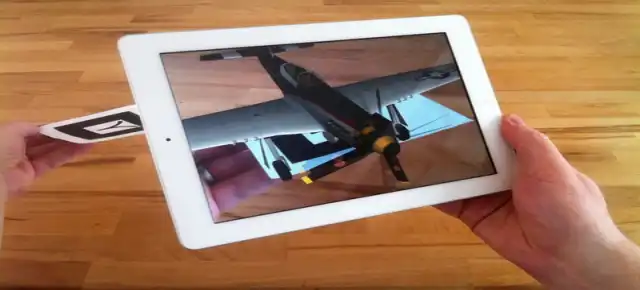
ARKit is Apple's augmented reality development framework for iOS mobile devices. It combines advanced scene processing, camera scene capture, device motion tracking, and display conveniences to help developers create mesmerizing AR experiences using either the back camera or front camera of an iOS device.
The first version of ARKit was released on September 19, 2017, as part of iOS 11, the eleventh major release of the iOS mobile operating system. Since then, there were two major releases of ARKit: ARKit 1.5, which added support for 2D image detection, and ARKit 2.0, which extends this support to offer full 2D image tracking.
As a result of the improvements Apple has made to ARKit since its initial release, it’s now possible to use the framework to incorporate movable objects, such as 3D product renderings, into AR experiences and trigger them based on 2D images like posters, artwork, or signs. What’s more, the latest version of ARKit even makes it possible for multiple people to experience the same AR experience at the same time and come back to it later in the same state.
“We want everybody to be able to use AR, and so we've taken the complexity that developers would normally have to do in their apps and made it simple for them to convert all of their apps to an AR experience,” said Apple CEO Tim Cook. “And the thing that is very different about Apple is that, in one day, we can make AR available for hundreds of millions of people.”

Do I Have to Use ARKit to Develop Augmented Reality Apps for iOS?

This question is easy to answer: no, there are many other AR frameworks on the market.
What makes ARKit the right choice for all new iOS developers is its first-class platform support (ARKit is compatible with all devices that run on iOS 11 and have A12, A11, A10, or A9 chips), fast and stable motion tracking, the ability to judge the amount of light present in a scene and use this information to apply the perfect amount of lighting to virtual objects, and more.
The biggest advantage of competing AR frameworks is their support for multiple platforms. If you would like to develop an AR app and release it, for example, both on iOS and Android without having to essentially rewrite it from scratch, you need a multi platform AR framework, which leaves ARKit out of the question.
Here are the top 5 multi platform AR frameworks you should know about:

Vuforia

Vuforia
This market-leading AR framework supports iOS, Android, Universal Windows Platform, and Unity. Vuforia allows you to attach AR content to 3D models, images, objects with flat surfaces and multiple sides, cylindrical and conical shapes, products with rich surface details, and VuMarks. The framework handles background effects, video playback, virtual buttons, occlusion management, and many other things.

Kudan

Kudan
This Android and iOS augmented reality framework is perfect for all applications that demand excellent performance because it uses a high-performance engine and supports SLAM(Simultaneous Localization and Mapping), which is a technology that understands the physical world through feature points.

ARToolKit

ARToolKit
If you’re a fan of open-source software, ARToolKit might just be the right AR framework for you. With its automatic camera calibration utilities, simultaneous tracking of several objects, OpenSceneGraph support, and a plethora of other features, ARToolKit simplifies AR development to such an extent that anyone can do it.

Wikitude

Wikitude
Offering support for object and scene recognition, instant tracking, image recognition, location-based services, multiple image targets, extended tracking, cloud recognition, and 3D augmentations, it’s no wonder that Wikitude is a learning AR framework. Because Wikitude supports Android, iOS, Windows, and smart glasses, you can code your app only once and run it everywhere.

Maxst

Maxst
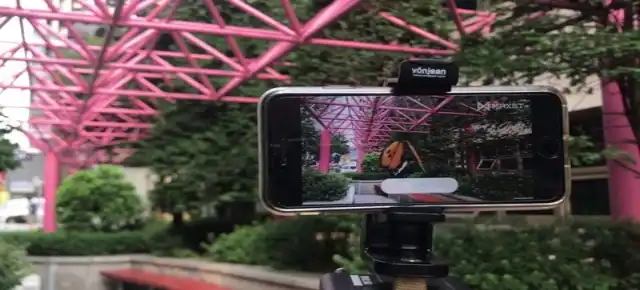
Maxst is a multi platform AR framework that provides all the features and environments developers need to create game-changing AR apps. It’s priced affordably, and you can get started with it for free. Thanks to its extensive documentation and helpful forums, you should be able to get your first AR app up and running in no time.

Getting Started with ARKit

There are a couple of things you need before you can start building AR apps for iOS using Apple’s ARKit:
  • Compatible iOS device

    To test your AR app, you need a compatible iOS device. We recommend you visit the iOS Device Compatibility Reference site to see which iOS devices are compatible with ARKit.
  • Mac computer

    As you may already know, you need a Mac computer to develop iOS app, at least using without any third-party solutions. If you already have one, make sure that it runs macOS Sierra 10.12.4 or newer.
  • Apple ID

    You won’t be able to obtain Apple’s integrated development environment and publish your AR app on the App Store without an Apple ID, so make sure to create one here. Besides Apple ID, you should also register for an Apple developer account.
  • Xcode

    Apple has its own integrated development environment for developing software for macOS, iOS, watchOS, and tvOS, and you should use it. Xcode is available for free from the Mac App Store. ARKit is included in the latest version of Xcode, making everything so much more convenient.

With everything ready, it’s time to create your first AR app:

  • Launch Xcode and select the Augmented Reality App project template.
  • Choose options for your new project.
  • We recommend you choose Swift as the programming language, but you can also choose Objective-C if you already know it.
  • The selection of Content Technology is a little bit more complex, and this article provides a good explanation.
  • Preview the AR app on your iOS device by selecting “Window” from the top menu bar, clicking “Devices and Simulators,” and double clicking your iOS device.
  • The Augmented Reality App project template comes with a simple AR demo that displays a fighter jet in the air in front of your device’s camera.
  • To run your first AR app, click the Run option located in the top menu bar in Xcode.
  • You should see the app on your iOS device!
It’s beyond the scope of this article to describe in detail how to customize the sample app or build something similar from scratch, but we hope that you now understand that anyone can start developing AR apps in just a couple of minutes.

Conclusion

Augmented reality has the potential to fundamentally change our relationship with the world around us, and it’s up to developers to make it happen. Apple has done its part, releasing an augmented reality framework and software development tools that make it possible for anyone to get started developing interesting AR apps in no time, and we’ve explained just how accessible it has made AR development.

martes, 14 de enero de 2020

15 New Technologies That Will Make Your 2020 Much More Interesting

Posted by New event enero 14, 2020, under | No comments

15 New Technologies That Will Make Your 2020 Much More Interesting


Are you looking for some great tech to make your 2020 a fantastic year? Then why not check out some of these great suggestions?

What new cool technology is coming in 2020?

If you are looking for something a little different next year, here are some great gadgets you can get your hands on in 2020.
  • Skyroam Solis X WiFi Smartspot
  • Amazon Echo Show 5
  • Bose Audio Sunglasses
  • Vaonis Stellina portable smart telescope
  • Anden Apple Watch Valet

What are some great new technologies I can buy right now?

If you are looking for some great gift ideas, or just want to make your life a little bit easier, here are 15 great gadgets you can get your hands on right now.

1. Meet the new challenger to Apple's Airpods - Echobeat

Echobeat is the latest generation of wireless earphones out of Silicon Valley who are vying for a cut of the Apple Airpods market. They are the top of the range in quality and are a bit more affordable than their competition.
Echobeat wireless headphones have great ergonomics and do not compromise on sound quality. They work using BlueTooth technology meaning you can run, climb, cycle, or just move around without the fear of them being yanked out of your lugholes by the cable. 

2. FIXD - The micro-car mechanic that will save you a fortune

FIXD is a relatively new innovative gadget that will save you a ton of cash on unnecessary car repairs. It can also help you clear up any doubt what that mysterious "check engine" warning light has appeared again.
Simply plug it into your car's diagnostics port and the little device will tell exactly what the problem is in no time. It only works on cars built since 1996 and has already sold over 50 million dollars in sales in 2018.

3. DroneX is your own personal photographer

DroneX is a new mini-drone that is perfect for any beginner in the world of drones. It is compact, relatively cheap and is just the size of an average smartphone.
Charge the battery, install the app and in within seconds you will be good to go.

4. Xtra-PC breathes new life into old PCs and laptops

If you have an old PC or laptop lying around, or your current one is getting a bit slow, why not try Xtra-PC. This tiny USB drive contains an incredibly fast operating system based on Linux that can bypass your computer's existing sluggish one.
Simply insert it into a USB port, restart the computer and you are all set. You don't need any other technical skills to use it.

5. Mosquitotron is a non-toxic mosquito trap

Meet Mosquitotron; a non-toxic yet effective mosquito trap. This great little anti-pest gadget will keep you and your family safe from being harassed by these little flying devils. 
It uses UV light to attract and ultimately capture any mosquitoes in your home. Victims are then sucked into the unit and killed by being dried to death.

6. TapNCharge is a great little wireless charging pad

If you are fed up with hunting around your house for that damned charging cable, you might want to consider a wireless charging pad like TapNCharge. Place it anywhere you want in your home, plonk your phone on top and the pad will do the rest.

7. Keysmart might be the future of keychains

2020 new tech keysmart
Source: KeySmart
If you need to carry around a ton of keys in your pocket, you might want to save space by trying out KeySmart. This great little gadget helps you organize and hold your keys in one small, neat package. 
Not only that, you trouser pockets should last the little bit longer too. Win, win. 

8. Turn your phone into a HUD with Vizr

Vizr lets you turn your run of the mill smartphone into a cool Heads-up Display. This will be especially handy if you rely on your mobile device as an in-car GPS. 
Never take your eyes off the road again with this great piece of kit. 

9. Get your own personal car GPS tracker with iTrack

iTrack is a great little device that plugs into your car's diagnostics port to feed you real-time updates about your car's current position. Sleep safe and sound in the knowledge that if your car does mysteriously disappear one day you'll be able to track its location and tell the authorities. 

10. SonicX Pro is the next generation in toothbrushes

2020 tech gadgets sonicX pro
Source: SonicX Pro
Improper or ineffective brushing is the number one cause of many dental problems. This can cost you your hard-earned cash at the dentist as well as impact your quality of life.
Avoid this problem in the future with the next generation in toothbrushes - SonicX Pro. It is 100 times more powerful than other electric toothbrushes on the market. 

11. Muama will make you fluent in any language in no time

Muama might be the translation assistant you have always dreamed of. Becoming fluent in any foreign language takes dedication and a lot of practice so anything that helps speed up the process is of great benefit.
This pocket-sized device lets you speak in our native tongue to any non-speakers anywhere in the world. The device translates vocal sentences into the chosen output language within seconds enabling hassle-free two-way communication.

12. Get your own personal gadget-masseuse

Save a ton of cash on professional masseuses with this great little gadget. NeckMassager will relieve neck and back pain in no time and all from the comfort of your own chair.
Simply slip it on to your neck and let it massage your tired muscles in a soothing and relaxing fashion.

13. Upgrade your old showerhead with Ionic Spa

2020 interesting gadgets ionic spa
Source: dynergy
Ionic Spa is a revolutionary showerhead that was designed by two passionate engineers. It promises to offer you a better showering experience an prevents the buildup of limescale over time. 
It will also reduce your water consumption meaning it will pay for itself over the long run. 

14. Back up and store your photos and videos with PhotoStick

PhotoStick is not just any ordinary USB external storage device. Plug it in, click "Go" and let The PhotoStick find and backup all your precious videos and photos in no time.
It has the capacity to store around 60,000 photos and videos.

15. Keep a check on your health with this new smartwatch

Hot on the heels of other smartwatches that can keep an eye on your vitals comes the latest entry into the market. XWatch is the personal 24/7 health diagnostic gadget that you've always needed.
This new smartwatch has all the features you need in order to keep track of your life – a calendar, and the ability to monitor your vitals at all times. It can even perform an examination of your heart.

Microsoft ends support for Windows 7: What you need to know

Posted by New event enero 14, 2020, under | No comments

Microsoft ends support for Windows 7: What you need to know


Microsoft’s support for Windows 7 ends today. This is by design: Microsoft provides at least a decade of support for its operating systems, split into two distinct types. Windows 7, the successor to Windows Vista, hit RTM status on July 22, 2009 and hit general availability on October 22, 2009. Microsoft thus supported Windows 7 for just over its minimum 10 years. That includes a service pack (in March 2010) and a Platform Update (in February 2013). Microsoft ended Mainstream Support on January 13, 2015, and now Extended Support on January 14, 2020.
And yet, Windows 7 is the Microsoft operating system that millions do not want to upgrade. Just like Windows XP users, which shunned Windows Vista, Windows 7 users shunned Windows 8. Only once Windows 10 showed up did the real upgrade cycle begin, helping sell PCs along the way. And again similar to Windows XP, even though most consumers have moved to Windows 10, many businesses still cling to Windows 7.
In September 2019, when Windows 10 passed 50% market share, Windows 7 had 30.34% market share. Windows 7 has continued to decline slowly, capping off last year with 26.64% market share. Nonetheless, one in four computers running Windows 7 is still hundreds of millions of computers running a decade-old operating system.

What end of support means

Microsoft’s Mainstream Support includes free incident support, warranty claims, fixes for non-security as well as security bugs, plus design changes and feature requests. Extended Support consists solely of security updates. In other words, Windows 7 is dead in Microsoft’s eyes.
If you continue to use Windows 7, your computer will still work, but it will become more vulnerable to security risks and malware. Software and hardware manufacturers will be even less likely to make products that work with the operating system, opting to focus on more recent versions of Windows.
For over a year now, Microsoft has been warning Windows 7 users about the January 14, 2020 date. Now that it’s here, security updates are no longer available for Windows 7, at least not for free. You may, however, be able to purchase Windows 7 Extended Security Updates (ESUs).
Regardless, Microsoft plans to start showing a new pop-up notification to Windows 7 users tomorrow. From the KB4530734 support article:
Starting on January 15, 2020, a full-screen notification will appear that describes the risk of continuing to use Windows 7 Service Pack 1 after it reaches end of support on January 14, 2020. The notification will remain on the screen until you interact with it.
This notification will show up on the following Windows 7 editions: Starter, Home Basic, Home Premium, Professional, and Ultimate. If you have purchased Windows 7 ESUs, your computer is domain-joined, or is in kiosk mode, the notification will not appear.
For an overview of other important upcoming dates for Microsoft’s desktop operating systems, check the Windows Lifecycle page. The next major end of support date is for Windows 8.1, on January 10, 2023. If you’re still on Windows 7, you could move to Windows 8.1, but you should jump straight to Windows 10.

10 technology trends that will impact our lives in 2020

Posted by New event enero 14, 2020, under | No comments

10 technology trends that will impact our lives in 2020


2020 — it’s when the world will see transformational changes in how technology impacts our lives. Here’s a look at the top technology trends that will influence us.

Trend 1: Breakout moment of artificial intelligence (AI) in manufacturing

AI is now part of everyday life, driven by the emergence of a device ecosystem including Alexa, Siri, and Google Assistant. In 2020, emotion recognition and computer vision will scale and AI will have a breakout moment in manufacturing.
U.S. startups Vicarious, Kindred, and Osaro stand out in using AI technologies for manufacturing. Kindred’s technology is used to automate part of distribution for apparel brands such as GAP. Vicarious is attracting investment from Mark Zuckerberg, Jeff Bezos, and Elon Musk.

Trend 2: Practical deployment of Internet of Things (IoT)

IoT is hot but there are not as many mainstream applications today as some predicted. We anticipate that with 5G, the number of connected devices and mainstream IoT applications will reach scale.
Amazon recently launched Amazon Go, a system that uses IoT and machine vision technologies to enable consumers to shop without manual check out. Environments will use more sensors and vision technologies, enabling more scalable IoT solutions. Startups Standard Cognition (U.S.), Accel Robotics (U.S.), Trigo (Israel), Grabango (U.S.), and AiFi (U.S.) provide similar services as Amazon Go.

Trend 3: Increased demand for edge computing processing power

2020 will see the need for higher performance from edge computing hardware since better sensors and larger AI models now enable a host of new applications. There is a growing need to infer more data and then make decisions without sending data to the cloud.
Chip startups SambaNova (U.S.), Graphcore (U.K.), Cerebras (U.S.), Wave Computing (U.S.), and Syntiant (U.S.) have developed architectures to handle increased demand. High-performing AI chips, known as neuromorphic or brain chips, mimic the structure of ​​the brain and process top AI algorithms.

Trend 4: Commercialization of quantum computing usage in mass scale

We expect 2020 to begin the quantum computing era. As data increases, quantum computing will target the biggest problems in industry, such as health care and energy. In 2020, the ability to handle big data will be required for cancer treatment, nuclear energy control, and DNA analysis. Corporations IBM, Google, Intel, Microsoft, and Alibaba have moved into quantum computing.
Startups Rigetti (U.S.), D-Wave Systems (Canada), and QC Ware (U.S.) are disrupting quantum computing. The technology will grow as it becomes easier to use with platforms such as Amazon Web Services by mid-2020.

Trend 5: Evolution of aerospace technologies

Mankind will begin its return to space in 2020, largely driven by the private sector. Since the Cold War, technological advances have slowed. Notable companies now making aerospace advancements include SpaceX and Blue Origin.
SpaceX is developing the rocket Starship, which will reuse the entire vehicle body. Starship may shorten intercontinental trips to 20-30 minutes via space. In China, the government and private enterprises (example: LinkSpace) are making progress in space.

Trend 6: New era of the internet — deployment of 5G and Starlink broadband internet technology

5G competition between the U.S. and China is entering the main stage in 2020. There will be a new competition about who can propel 5G faster into mass consumer use. Another hot topic is the Starlink Broadband business planned by SpaceX.
Until 2020, as many as 2,500 satellites will be launched. This marks a new era of broadband Internet for some users in North America. Starlink’s broadband Internet system will grow with 12,000 satellites through 2023, followed by the addition of 30,000 satellites. SpaceX will provide higher speed Internet starting in 2020.

Trend 7: Evolution of health care — predictions at the genome level

Under the theme of prevention, digital health care has seen much innovation. In the U.S., startups 23andMe and Color lead in genome analysis, while Genesis Healthcare stands out in Japan and Genoplan in Korea. These companies use genomic analysis to learn of diseases and provide prevention methods.
The evolution of AI will improve the quality of treatment. In 2020, many medical images taken using MRI, CT scans, and X-rays will be diagnosed using AI. Startups Enlitic and Zebra Medical Vision stand out as leaders.

Trend 8: Evolution in Agriculture – technology to Grow Crops Efficiently

In agriculture, companies that offer products using computer vision, AI, and big data stand out. In 2020, it will become common to monitor crop growth by computer vision Ceres Imaging (U.S.), Taranis (Israel), Farmwise (U.S.).
Robots, such as those by Abundant Robotics, that harvest plants and fruits will become more common. The technology for improving crop growth efficiency will also be enhanced by indoor farming companies, such as Bowery Farming (U.S.), funded by GV.

Trend 9: Evolution of autonomous driving technology

Autonomous driving is already a hot topic, although level 5 (fully autonomous) has not been realized. Some Tesla cars can be switched to autopilot mode on the highway, but this is only possible up to level 2 (driving support) or level 3 (operated by the driver in an emergency).
Technology for understanding detailed road conditions by AI is evolving. Startups Prophesee (France), Perceptive Automata (U.S.), and Humanising Autonomy (U.K.) stand out as leaders. They will contribute towards achieving level 5 in 2020.

Trend 10: The U.S. and China put blockchain to practical use

As blockchain grows, payment-type venture companies and venture companies in security — such as Chainalysis, which develops money laundering countermeasure technology — are attracting attention.
In 2020, major institutions will introduce blockchain to prevent large-scale information leakage and Internet fraud. IBM set up an accelerator program specializing in blockchain. China approved the introduction of blockchain in services such as ICBC (China Industrial and Commercial Bank), Alibaba Group, China Southern Airlines, etc. In 2020, blockchain will be put to practical use.

Technologies changing the world

These 10 technologies will change the world in 2020. While there are concerns about workforce impact, there is little doubt that 2020 will be a time of innovation as people better leverage technology.

Anis Uzzaman is CEO of Pegasus Tech Ventures. Located in Silicon Valley, Pegasus Tech Ventures provides early stage and final round funding. With several multi-million dollar funds under management, Pegasus Tech Ventures focuses its investment in IT, Health IT, Artificial Intelligence, IoT, Robotics, Big Data, Virtual Reality, Augmented Reality, FinTech and Next Generation Technologies.
Anis has invested in over 170 startups in the U.S., Japan, and South East Asia. Some of the prominent U.S. startups in the Pegasus Tech Ventures portfolio include Vicarious, Color Genomics, Genius, Affectiva, Afero, x.ai, and ShareThis. Anis is an investor and board member of Tech in Asia, the largest tech media blog in Southeast Asia. Anis also sits on the board of directors of Affectiva, Lark, Asteria, and I AND C-Cruise.

Sponsored articles are content produced by a company that is either paying for the post or has a business relationship with VentureBeat, and they’re always clearly marked. Content produced by our editorial team is never influenced by advertisers or sponsors in any way. For more information, contact sales@venturebeat.com.

Tags

Blog Archive